Practical tax knowledge for business owners doing $500K to $10M+ in revenue.
The One Big Beautiful Bill expanded the FICA tip credit beyond restaurants. Salons, barbershops, nail techs, and spas now qualify — and most don't know it. Here's how to claim it.
The One Big Beautiful Bill permanently restored 100% first-year bonus depreciation. If you buy equipment, vehicles, or property improvements — here's what changed and how to use it.
The OBBBA quadrupled the employer childcare credit — now worth up to $500K–$600K per year. If you provide or subsidize childcare for employees, this is the biggest new incentive available.
The 'no tax on tips' provision creates an above-the-line deduction for tipped employees — and new reporting requirements for employers. Here's what changed and what you need to do.
The 20% qualified business income deduction was set to expire in 2025 — now it's permanent under the OBBBA, with expanded phase-out ranges and a new minimum deduction. Here's what it means for you.
From 2022–2024, businesses had to amortize R&D costs over 5 years. The OBBBA restored immediate expensing — and it's retroactive. Here's how to claim back what you lost.
For the first time ever, personal auto loan interest is tax-deductible — up to $10,000 per year on U.S.-assembled vehicles. Here's who qualifies and how to claim it.
The One Big Beautiful Bill doubled the Section 179 deduction limit from $1.25M to $2.5M. Here's what the new limits mean for equipment purchases and how to stack it with bonus depreciation.
A CPA files your return. A tax strategist reduces it. If you earn $300K+ and nobody's calling you with ideas mid-year, you're likely overpaying. Here's how the two roles differ.
Not all tax strategists are created equal. Some are glorified CPAs with new titles. Here are seven questions that separate real strategists from pretenders — and what the right answers sound like.
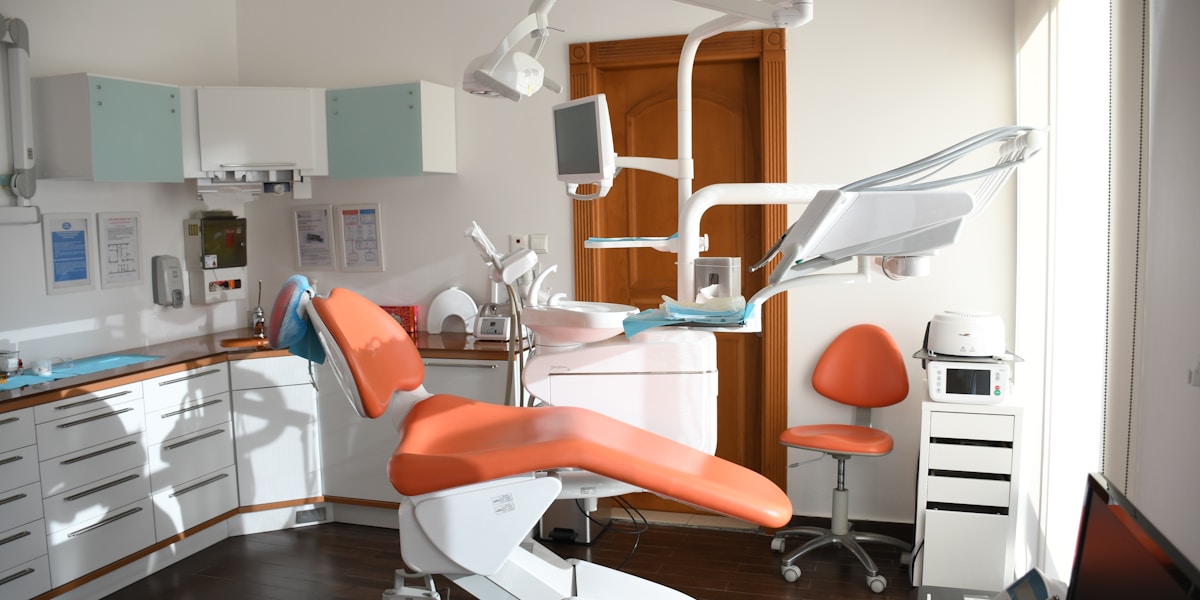
From CBCT depreciation to CE travel to retirement plan contributions — here are the 15 most impactful deductions and credits for dental practices this tax year.
How you structure a dental practice acquisition determines whether you save $50K or $200K over the first five years. Entity choice, asset allocation, and financing all matter — here's the playbook.
Running 3+ restaurant locations multiplies your tax complexity — but also your opportunities. Cost seg on each buildout, FICA tip credits across locations, and entity layering can save $50K–$200K+ annually.
Ovens, fryers, walk-ins, POS systems — restaurant equipment qualifies for Section 179 and bonus depreciation. A $200K kitchen buildout could generate a $200K deduction this year.
Going from W-2 associate to practice owner changes everything about your taxes — estimated payments, self-employment tax, entity elections, and deductions you never had before. Here's how to plan the transition.
Between heavy equipment depreciation, R&D credits for process innovation, and S-Corp optimization — construction companies leave $50K–$300K+ on the table annually. Here's the complete playbook.
Med spas face corporate practice of medicine laws in most states. The wrong entity structure doesn't just cost you tax savings — it can put your entire business at legal risk. Here's how to get it right.
For rental properties, LLCs almost always win. For active real estate businesses — flipping, management, brokerage — an S-Corp can save $15K–$40K in self-employment tax. Here's the decision framework.
Cost segregation studies typically run $5,000–$15,000 — and generate 6–12x that amount in first-year tax savings. Here's what drives the price and how to evaluate the ROI for your property.
Both let you save up to $70,000 for retirement in 2026 — but the Solo 401(k) offers a Roth option, loan provisions, and better contribution math at lower income levels. Here's the full comparison.
Over 40 legitimate tax deductions organized by category — from home office to vehicles to retirement contributions. The definitive reference list for small business owners filing in 2026.
Misclassifying a worker as 1099 instead of W-2 can trigger back taxes, penalties, and an IRS audit. Here's how the classification rules work and what both sides need to know.
With 100% bonus depreciation restored, a cost segregation study on a $1M property can generate $200K–$400K in first-year deductions. Here's how to stack both strategies for maximum impact.
Med spas sit at the intersection of healthcare and aesthetics — and the tax code treats them differently depending on ownership, services, and structure. Here's how to optimize your med spa's tax position.
Self-employment tax eats 15.3% of your net income — but there are legal ways to reduce it. S-Corp election, retirement contributions, health insurance deductions, and more. Here are five moves that work.
Growth, tax savings, take-home pay, retirement, a new home — your goals compete for the same dollars. Here's a 5-step framework for ranking what matters most so your advisors can build a plan that actually works.
SEP IRA, Solo 401(k), SIMPLE IRA, defined benefit plan — each has different contribution limits, tax treatment, and complexity. Here's a side-by-side comparison so you can pick the right one.
"It triggers audits." "It's only for new buildings." "It's too aggressive." None of these are true — but they stop CPAs from recommending one of the most powerful tax strategies available to property owners.
Yes — and most of our clients do exactly that. Your CPA handles compliance and filing. A tax strategist handles the proactive planning that reduces what gets filed. Here's how the two roles work together.
Tax strategy services typically range from $3,000 to $15,000+ per year depending on complexity. The question isn't the cost — it's the ROI. Here's how to evaluate whether the investment makes sense for you.
A good CPA keeps you compliant. A great one keeps you ahead. If your accountant only calls at tax time, never suggests strategies, and files extensions by default — you're probably overpaying the IRS.
The difference between an LLC and an S-Corp election can mean tens of thousands in self-employment tax savings — but timing and salary requirements matter. Here's how to evaluate the right structure for your business.
Law firm partners face unique tax challenges — guaranteed payments, pass-through income, state nexus issues, and massive self-employment tax exposure. Here are the strategies that cut the bill.
A full-time CFO costs $200K+. A fractional CFO gives you the same strategic financial leadership for a fraction of the cost — and most growing businesses need one sooner than they think.
Searching for a local cost segregation firm? The study requires a site visit — but the engineering and tax analysis can be done nationally. Here's how to evaluate providers and what actually matters.
Independent owner-operators run a business on wheels — and the IRS treats it that way. From depreciation to per diem to fuel tax credits, here's how to capture every deduction you've earned.
Most property owners depreciate their buildings over 27.5 or 39 years. Cost segregation reclassifies components to accelerate deductions — often generating six-figure tax savings in year one.
Trucks over 6,000 lbs GVWR get special treatment under Section 179 — no luxury vehicle caps. Here's how to maximize the write-off whether you're a contractor, fleet owner, or owner-operator.
Owner-operators and truck drivers have dozens of deductions unique to the industry — from per diem rates to truck washes to ELD equipment. Here's the complete list so nothing falls through the cracks.
The right business structure isn't just about liability protection — it determines how you're taxed on every dollar. LLCs, S-Corps, C-Corps, and holding companies each serve different purposes at different revenue levels.
A holding company can protect assets, consolidate real estate, and create tax-efficient distributions between entities. But it adds complexity — and isn't right for everyone. Here's who actually benefits.
There's a fundamental difference between tax compliance and tax strategy. Most CPAs are built for the first. If nobody's calling you in October with ideas, you're leaving money on the table.
Everyone says S-Corps save money — but how much, exactly? Here's a real-numbers breakdown at $100K, $250K, and $500K in net profit, including the payroll costs most calculators ignore.
There's a net income threshold where the S-Corp election starts saving you money — and a filing deadline you can't miss. Here's how to know when it's time and how to make the switch correctly.
The LLC-vs-S-Corp question isn't about which is 'better' — it's about which structure matches your revenue, profit margin, and growth trajectory right now. Here's the decision framework.
A 401(k) maxes out at $69,000 per year. A defined benefit plan lets high-income business owners contribute $275,000 or more — and deduct every dollar. Here's how it works and who benefits most.
Multifamily properties are among the best candidates for cost segregation — with 20–40% of building value typically reclassifiable. For a $2M apartment building, that's $400K–$800K in accelerated deductions.
Mortgage interest and depreciation are just the start. Real estate professional status, cost segregation, entity layering, and strategic timing of repairs can dramatically change your rental income tax picture.
A 1031 exchange defers your gain. A cost segregation study accelerates your deductions. Layer them together and you can sell a property, buy a new one, and generate a massive write-off — all tax-deferred.
Most real estate investors know about depreciation and 1031 exchanges. Far fewer use cost segregation, REPS status, installment sales, opportunity zones, and entity layering. Here are eight strategies that separate amateurs from pros.
Excavators, dump trucks, skid steers, and vehicles over 6,000 lbs GVWR get favorable tax treatment under Section 179 and bonus depreciation. Here's exactly what you can write off and when.
Building envelope testing, foundation engineering for challenging sites, energy-efficient design development — construction companies routinely perform qualifying R&D activities without realizing it.
Contractors earning $100K+ in net profit can save $10K–$30K per year with an S-Corp election — but seasonal income, multiple entities, and equipment ownership complicate the decision. Here's the framework.
New menu development, recipe testing, food preservation techniques, and even kitchen workflow improvements can qualify for the R&D credit. Most restaurant owners have no idea.
Restaurant buildouts are rich with short-life assets — kitchen hoods, specialty plumbing, walk-in coolers, decorative finishes. A cost segregation study can reclassify 25–45% of your property for accelerated deductions.
Between FICA tip credits, WOTC, cost segregation on your buildout, and equipment write-offs — most restaurant owners claim less than half the deductions available to them.
Selling your practice triggers capital gains, depreciation recapture, and potentially ordinary income — and how the purchase price is allocated determines which tax rate applies. Planning before listing can save six figures.
Most dentists default to an LLC and never revisit the decision. An S-Corp election can save $15K–$40K per year in self-employment tax — but it's not right for every practice. Here's how to decide.
High-income dentists can contribute far more than a 401(k) allows. Defined benefit plans let practice owners shelter $200K–$300K+ annually — with every dollar tax-deductible. Here's how it works for dental practices.
If you own your dental office building, 25–40% of the property value can be reclassified for accelerated depreciation. For a $600K property, that's $150K–$240K in accelerated deductions.
That $150K CBCT scanner or $250K CAD/CAM system? Under Section 179, you can deduct the full cost in the year you purchase it — but timing and entity structure matter. Here's how dentists should approach it.
From CBCT scanners to CE travel to practice management software — dentists leave thousands on the table every year because they don't know these deductions exist. Here's what to claim.
Between Section 179, bonus depreciation, and the actual expense method, a business vehicle can generate a $30,000–$80,000 write-off. But the rules depend on weight, use percentage, and how you title it.
Contractors and construction businesses have unique deductions most generalist CPAs miss — from heavy equipment depreciation to job-site vehicle write-offs. Here's the comprehensive list.
If your employees receive tips, you're paying the employer share of FICA on those tips — and the federal government will give you a dollar-for-dollar credit for most of it. Here's how the FICA tip credit works.
There are hundreds of tax strategies, but most don't apply to you. Here are the moves that consistently save small business owners $20K–$100K+ per year — ranked by impact and ease of execution.
Set your S-Corp salary too low and the IRS reclassifies distributions as wages. Set it too high and you lose the tax benefit. Here's how to find the number that holds up under scrutiny.
Effective tax planning isn't a once-a-year event — it's a system. Here's a four-quarter framework that keeps your tax liability low and your strategy aligned with your actual business goals.
The 2026 Section 179 deduction limit has increased to $1.25 million with a $3.13 million phase-out threshold. Here's what changed from last year and how it affects your equipment purchasing decisions.
Most business owners only think about taxes at filing time — by then, the best moves are off the table. Year-round proactive planning is the difference between compliance and strategy.
If your business develops new products, improves processes, or creates software, you likely qualify for the R&D credit — even if you're a small company without a formal R&D department.
Section 280A lets you rent your personal home to your business for up to 14 days per year — and the rental income is completely tax-free. Here's how the Augusta Rule works and how to document it properly.
100% bonus depreciation is back after the One Big Beautiful Bill restored full first-year expensing. Here's what the new rules mean for equipment purchases, cost segregation, and your year-end planning.
Real estate investors can reclassify 20–40% of a property's value into shorter depreciation categories — unlocking six-figure deductions in year one. Here's how cost segregation works for rental, multifamily, and commercial properties.
The Work Opportunity Tax Credit gives you up to $9,600 per qualified hire — and the certification process is simpler than you think. Here's who qualifies, how to claim it, and why most businesses leave this money on the table.
The R&D tax credit isn't just for tech companies in lab coats. Manufacturers, contractors, restaurants, and software firms all qualify — most just don't know it. Here's how the credit works and who should claim it.
The IRS treats heavy vehicles differently — and that difference can mean a $30,000+ write-off in year one. Here's exactly how the vehicle weight rules work and which cars, trucks, and SUVs qualify.
The Section 179 deduction lets you write off the full cost of qualifying equipment and property in the year you buy it — up to $1.25 million. Here's what qualifies, what doesn't, and how to maximize it.
Every business has untapped savings. Book a free review and we'll identify the opportunities hiding in your numbers.
Tell us about your business and we'll identify every savings opportunity available to you.